No Words Needed: The Craft Behind Anime's Most Devastating Silent Fight Scenes
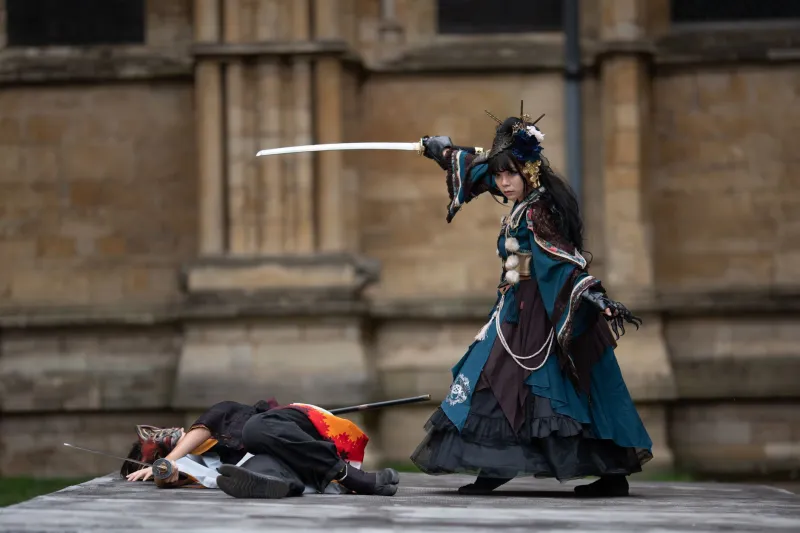
There's a moment in a great anime fight where everything just... stops talking. No power-level exposition. No mid-punch backstory. Just motion, impact, and the kind of raw visual communication that makes your pulse spike without a single character opening their mouth. It sounds simple. It absolutely isn't.
The best directors in the industry know something that a lot of Western action storytelling tends to overlook: silence is a weapon. Used correctly, it makes the hits feel heavier, the speed feel more dangerous, and the stakes feel more real. So let's dig into exactly how it works — the technical side, the creative decisions, and why trusting your animation to carry the load is one of the hardest and most rewarding choices a director can make.
The Camera Doesn't Need a Narrator
When Masashi Ishihama directed the Gotouge adaptation sequences that fans still screenshot to this day, one of the most consistent choices was restraint. Not laziness — restraint. There's a fundamental difference between a fight that goes quiet because the budget ran out and one that goes quiet because the director decided the animation itself had more to say than any voice actor could.
The technical toolkit here is surprisingly specific. Smear frames — those intentionally distorted, blurred in-between drawings that capture the arc of a limb moving faster than the eye can track — do more emotional work per frame than almost any dialogue line. When you see an arm stretch into an almost abstract shape before snapping into a clean impact pose, your brain fills in the force. You feel the hit land even though you're sitting completely still on your couch.
MAPPA has leaned hard into this philosophy across multiple productions. Their approach to choreography frequently involves stripping out ambient dialogue during peak action and letting the animator's timing do the heavy lifting. The result is sequences that feel genuinely dangerous rather than performed — there's no character conveniently pausing to explain what's happening while the audience catches up.
Sound Design as the Second Language
Here's where things get interesting: a "silent" fight scene in anime is almost never actually silent. What gets removed is verbal communication. What stays — and often gets amplified — is everything else.
Foley work in top-tier anime action is genuinely underappreciated. The specific pitch of a blade cutting through air, the layered crunch of a bone-rattling impact, the way ambient sound drops out entirely for a fraction of a second right before a decisive strike — these are deliberate choices that function like punctuation. They tell you when to hold your breath and when to exhale.
Composers working on action-forward anime have talked about writing music that creates negative space rather than filling it. A score that swells and then suddenly cuts out is using that silence as a beat. Your nervous system responds to the absence of sound almost as strongly as it responds to the presence of it. When MAPPA pulls the audio floor out from under you right before a finishing move, that's not an accident. That's craft.
What Western Action Gets Wrong (And Why It Matters)
This isn't a dig at American filmmaking across the board — there are absolutely Western action directors who understand visual storytelling at this level. But as a broad tendency, Hollywood action has a dialogue problem. Characters explain their moves. Villains monologue at structurally inconvenient times. Heroes narrate their emotional state mid-combat as if the audience can't read body language.
The contrast becomes really clear when you watch a dubbed anime fight versus a subtitled one. Even in cases where the translation is accurate, the presence of voices during sequences that were animated to breathe on their own changes the experience. The audio competes with the visual instead of complementing it.
Anime that leans into silence is making a bet that its audience is engaged enough to read the frame. It's a form of respect, honestly — the assumption that you don't need things spelled out, that you can track momentum and emotional stakes through movement and composition alone.
The Specific Techniques That Make It Work
Let's get granular for a second, because this stuff is worth knowing.
Sakuga cuts and limited animation contrast — The most impactful moments in a fight are often set up by periods of deliberately simpler animation. When a sequence suddenly explodes into full, fluid motion after a stretch of more static frames, the contrast amplifies the impact. It's the visual equivalent of a quiet before the storm.
Perspective shifts — Great silent fight choreography uses camera angle changes to communicate information that would otherwise require dialogue. A sudden low angle makes a character feel overwhelming. A wide shot isolating a fighter in empty space communicates vulnerability. These aren't accidents; they're choices made in storyboarding and carried through to the final cut.
Impact frames — Those single-frame flashes of white or color that punctuate a hit aren't just stylistic flair. They're giving your eye a moment to reset, making the hit feel discrete and significant rather than blurring into the surrounding motion.
Negative space in the frame — Some of the most tension-filled moments in anime fights involve almost nothing happening visually. Two characters staring across empty space, the camera holding on a hand hovering near a weapon. The animation is doing almost nothing, but the scene is doing everything.
Why It Hits Harder
At the end of the day, the reason wordless action sequences in anime can be so devastating comes down to immersion. The moment a character stops to explain what's happening, you're reminded that you're watching something constructed. You step outside the experience slightly.
When the animation trusts itself — when the director lets the smear frames and the sound design and the camera angles carry the full weight of what's happening — you stay inside it. The hits land on you because nothing interrupted the circuit between what's on screen and your nervous system.
That's the real craft. Not just knowing how to animate a punch, but knowing when to shut everything else up and let the punch be the only thing in the room.